
EXFO
EXFO MAX-730C OTDR | 1310/1550/1625nm 39dB, PON 1x128, 0.5m Dead Zone, iOLM
EXFO MAX-730C OTDR | 1310/1550/1625nm 39dB, PON 1x128, 0.5m Dead Zone, iOLM
Couldn't load pickup availability
EXFO MAX-730C OTDR – Premium 3-Wavelength PON OTDR with 39dB Dynamic Range
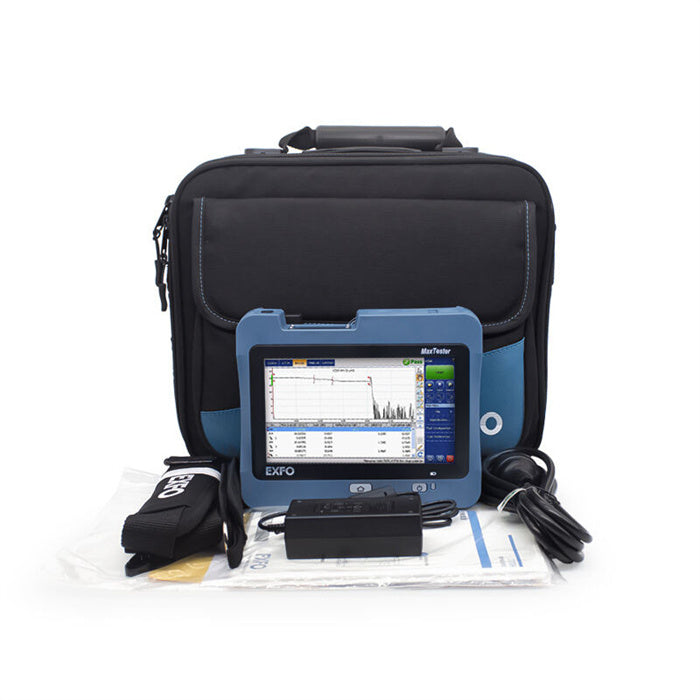
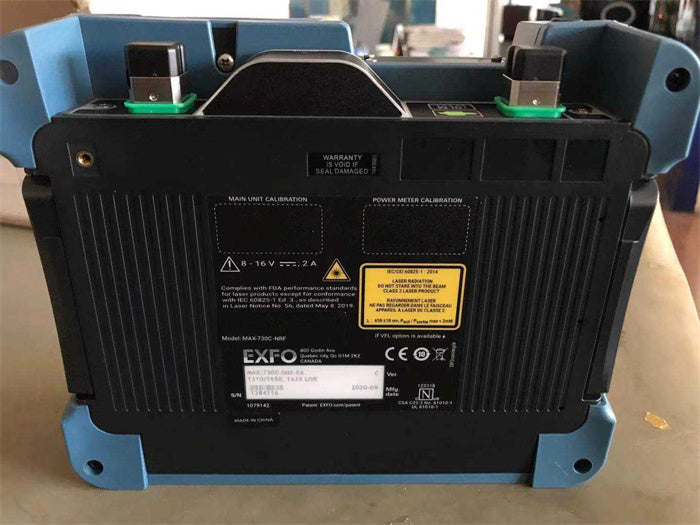
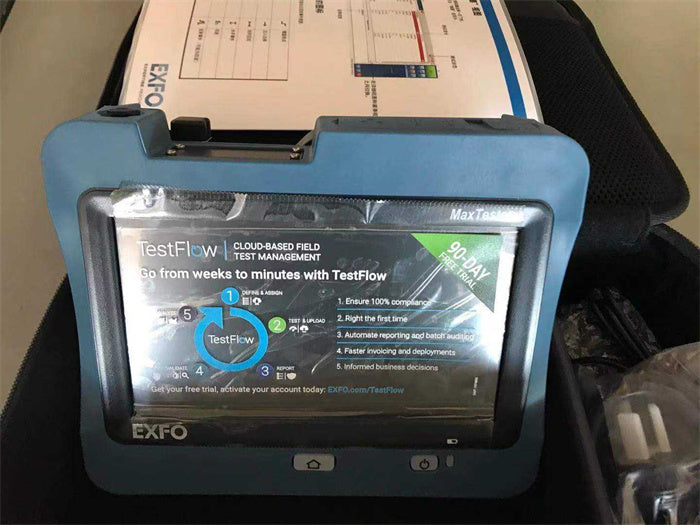
The EXFO MAX-730C is EXFO’s flagship handheld OTDR for demanding FTTx, PON, and metro network testing. Where the MAX-715B covers standard single-mode testing, the MAX-730C steps up with three wavelengths (1310/1550/1625nm), a massive 39/38/39dB dynamic range, an industry-leading 0.5m event dead zone, and a built-in PON power meter — all in the same rugged, tablet-inspired 7-inch touchscreen body. With a testing range of up to 400km and support for PON networks with up to 1x128 splitters, the MAX-730C is the tool of choice for engineers working on the most demanding fiber networks.
Why Choose the EXFO MAX-730C?
- 39/38/39dB Dynamic Range (1310/1550/1625nm): Nearly 10dB more than the MAX-715B — enabling testing of longer fiber spans, higher-loss PON networks, and more complex network architectures
- 3-Wavelength Testing (1310/1550/1625nm): Tests all three standard telecom wavelengths in a single instrument, including 1625nm for live fiber testing without service interruption
- 0.5m Event Dead Zone: Industry-leading 0.5m EDZ (half the MAX-715B’s 1m) for detecting closely spaced events in dense patch panels, splice trays, and central office environments
- PON Testing Through 1x128 Splitters: Specifically designed for FTTx/PON network testing through passive optical splitters up to 1x128 — the highest split ratio in common deployment
- Built-in PON Power Meter (Dual Channel 1490/1550nm): Integrated power meter eliminates the need for a separate instrument during PON commissioning and troubleshooting
- 400km Distance Range: Tests fiber spans from 0.1km to 400km — suitable for long-haul backbone, metro, and access network applications
- iOLM Software: EXFO’s intelligent Optical Link Mapper automatically characterizes the entire optical link with one touch — no manual trace interpretation required
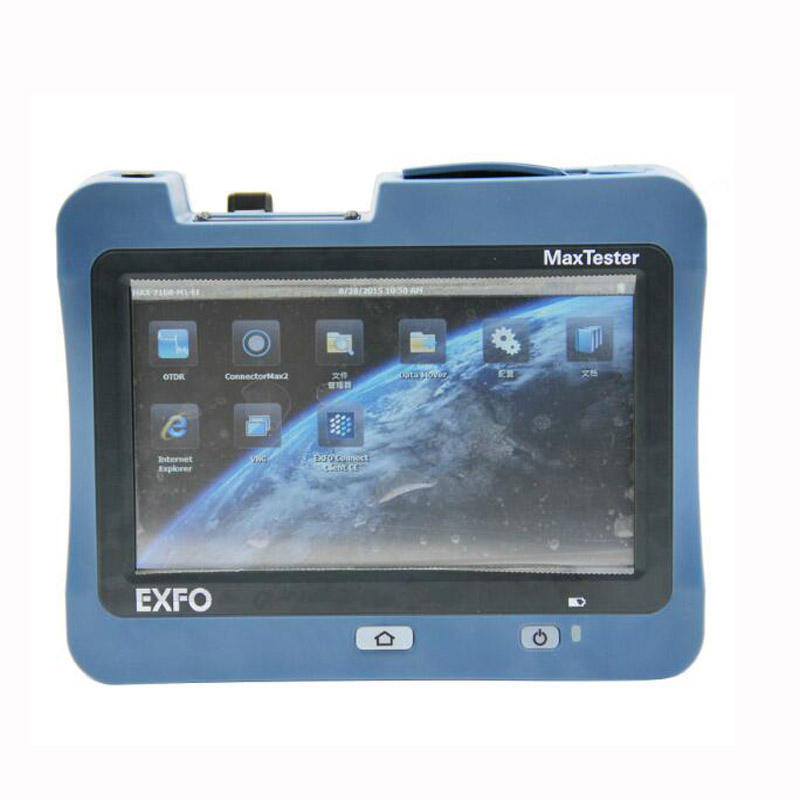
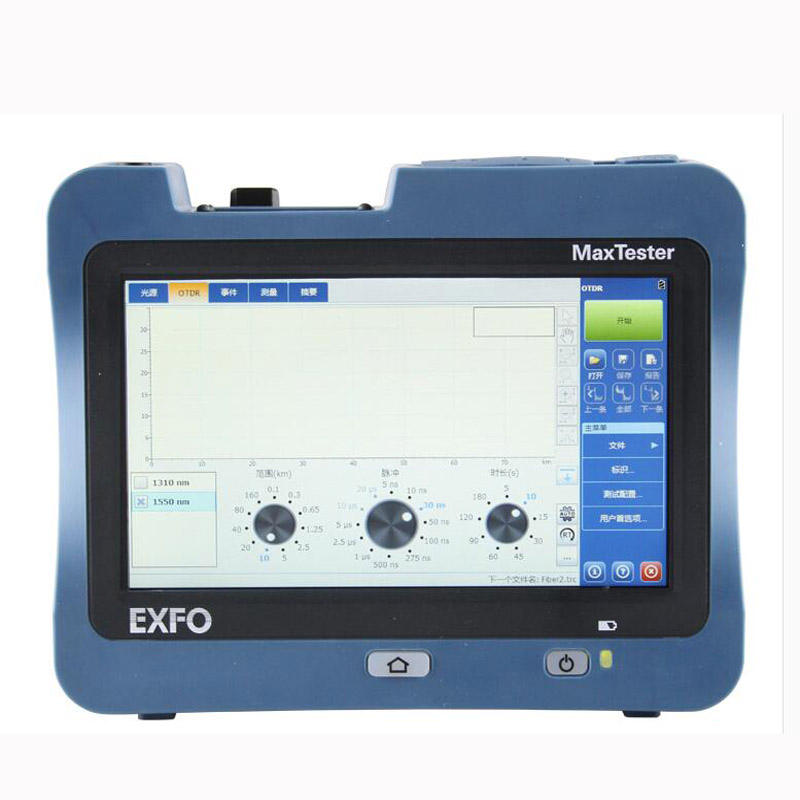
- 7-Inch Outdoor-Enhanced Touchscreen: The largest display in the handheld OTDR industry — 800×480 TFT optimized for bright outdoor conditions
- 12-Hour Battery Life: Full day of field testing on a single charge (Telcordia TR-NWT-001138)
- Live Fiber Testing at 1625nm: Built-in 1625nm live port filter (isolation >50dB) enables testing on live fiber without disrupting active services
Ideal Applications
- FTTx / PON network installation, commissioning, and troubleshooting (up to 1x128 splitters)
- Live fiber testing at 1625nm without service interruption
- Long-haul and metro backbone fiber testing (up to 400km)
- Access network point-to-point (P2P) testing
- Central office and data center dense fiber testing (0.5m dead zone)
- Network acceptance testing requiring automated iOLM reporting
MAX-730C vs. MAX-715B – When to Upgrade
| Feature | MAX-730C | MAX-715B |
|---|---|---|
| Wavelengths | 3 (1310/1550/1625nm) | 2 (1310/1550nm) |
| Dynamic Range | 39/38/39dB | 30/28dB |
| Event Dead Zone | 0.5m | 1m |
| Attenuation Dead Zone | 2.5m | 4m |
| Distance Range | 400km | 160km |
| PON Testing | Yes (up to 1x128) | Limited |
| Built-in Power Meter | Yes (dual channel) | No |
| Live Fiber (1625nm) | Yes | No |
| iOLM Software | Yes | Yes |
| Display | 7-inch outdoor touch | 7-inch outdoor touch |
| Battery | 12 hours | 12 hours |
Technical Specifications
| Parameter | Specification |
|---|---|
| Model | MAX-730C-SM2-Oi |
| Fiber Type | Single-mode (SM) |
| Wavelengths | 1310 ± 20nm / 1550 ± 20nm / 1625 ± 10nm / 1650 ± 5nm |
| Dynamic Range | 39dB (1310nm) / 38dB (1550nm) / 39dB (1625nm) / 39dB (1650nm) |
| Event Dead Zone | 0.5m |
| Attenuation Dead Zone | 2.5m |
| PON Dead Zone | 30m |
| Distance Range | 0.1 to 400km |
| Pulse Width | 3 to 20,000ns |
| Sampling Resolution | 0.04 to 10m |
| Sampling Points | Up to 256,000 |
| Loss Threshold | 0.01dB |
| Loss Resolution | 0.001dB |
| Linearity | ±0.03 dB/dB |
| Reflectance Accuracy | ±2dB |
| Real-Time Refresh | 4Hz (typical) |
| Live Port Filter (1625nm) | Highpass >1595nm, isolation >50dB (1270–1585nm) |
| Live Port Filter (1650nm) | Bandpass 1650nm ± 7nm, isolation >50dB |
| PON Power Meter | Dual channel: 1490/1550nm | Range: -65 to +18dBm (1490nm), -50 to +28dBm (1550nm) |
| Broadband Power Meter | 1270 to 1625nm | Uncertainty: ±0.2dB |
| Display | 7-inch outdoor-enhanced touchscreen, 800×480 TFT |
| Storage | 2GB internal (up to 20,000 OTDR traces) |
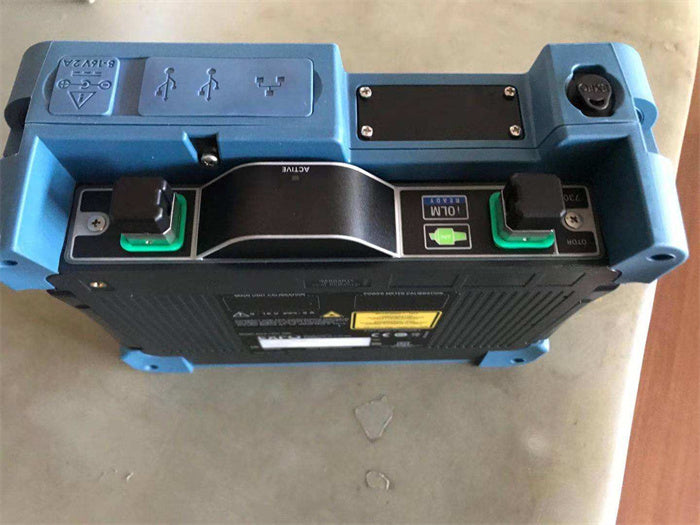
| Connectivity | 2× USB 2.0 | RJ45 LAN 10/100 Mbit/s |
| Battery | Rechargeable lithium-polymer | 12 hours (Telcordia TR-NWT-001138) |
| Power Supply | AC 100–240V, 50–60Hz |
| Dimensions | 166 × 200 × 68mm | 1.5kg (with battery) |
| Operating Temperature | -10°C to +50°C |
| Storage Temperature | -40°C to +70°C |
| Software | Oi (OTDR + iOLM) |
Frequently Asked Questions
Q: What is the advantage of 3-wavelength testing on the MAX-730C?
A: The MAX-730C tests at 1310nm, 1550nm, and 1625nm. The 1310nm and 1550nm wavelengths are standard for fiber characterization and loss measurement. The 1625nm wavelength is specifically designed for live fiber testing — it can test an in-service fiber without interrupting active data traffic, which is critical for maintenance and troubleshooting on live networks.
Q: How does the MAX-730C handle PON network testing?
A: The MAX-730C is specifically designed for FTTx/PON testing through passive optical splitters up to 1x128. Its 39dB dynamic range provides sufficient measurement margin to test through high-split-ratio PON networks, and its built-in dual-channel PON power meter (1490/1550nm) allows simultaneous power measurement without a separate instrument.
Q: What is the difference between the MAX-730C and MAX-715B?
A: The MAX-730C offers significantly higher performance: 39dB dynamic range (vs. 30/28dB), 3 wavelengths including 1625nm for live fiber testing (vs. 2 wavelengths), 0.5m event dead zone (vs. 1m), 400km distance range (vs. 160km), built-in PON power meter, and PON testing through 1x128 splitters. Choose the MAX-715B for standard single-mode testing; choose the MAX-730C for PON, live fiber, and high-performance applications.
Q: What does the 0.5m event dead zone mean in practice?
A: The event dead zone is the minimum distance after a reflective event before the OTDR can detect another event. The MAX-730C’s 0.5m EDZ — half that of the MAX-715B — is critical for testing dense environments like central office patch panels, splice trays, and data center fiber infrastructure where events may be very close together.
Q: What warranty and support does the EXFO MAX-730C come with?
A: For warranty details or support, contact us at sales@splicermarket.com.
